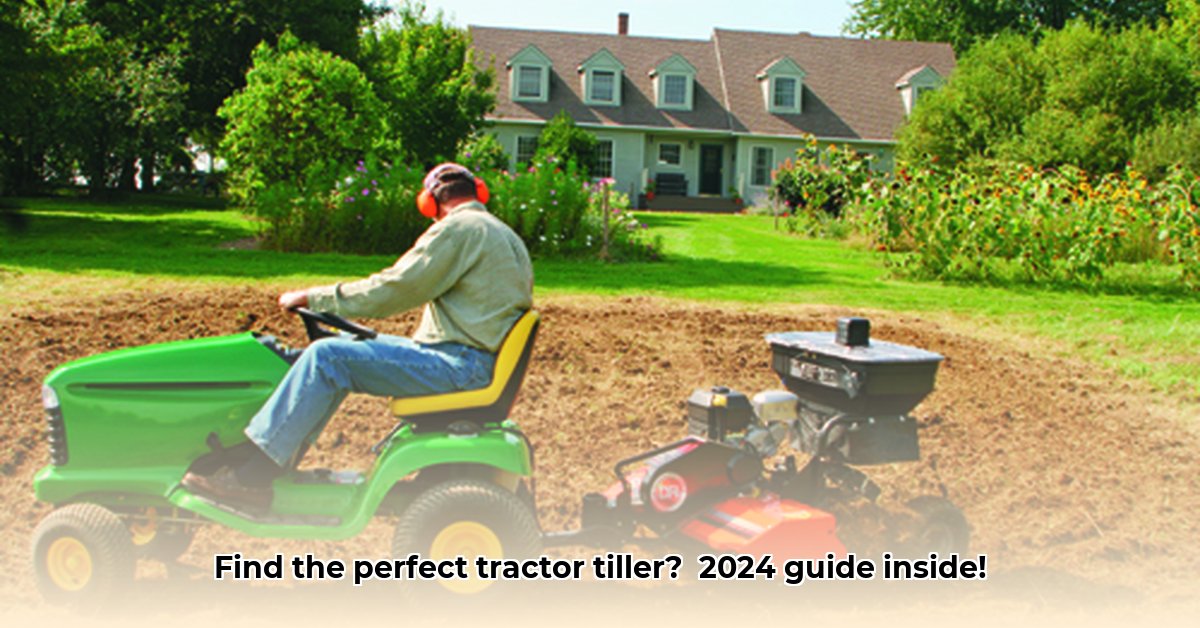
Ready to transform your gardening or small-scale farming? Selecting the right pull-behind tiller for your tractor is crucial for efficiency and ease. This comprehensive guide helps you navigate the choices, ensuring you find the perfect tiller for your soil, tractor, and budget. Choosing wisely means less backache and more time enjoying the fruits (and vegetables!) of your labor. For more detailed information on tractor PTO tillers, check out this helpful resource: PTO Tiller Guide.
Factors to Consider When Choosing a Pull-Behind Tiller
Several key factors influence your tiller selection. Ignoring them can lead to equipment damage, inefficient work, and wasted time. Let's explore the most critical considerations:
Soil Type and Conditions: Adapting to Your Terrain
Soil dramatically impacts tiller choice. Heavy clay soil, dense and sticky, needs a powerful tiller with robust tines to break it effectively. Imagine trying to dig through concrete versus loose sand – the effort differs greatly. Sandy soil is easier to manage, allowing for a lighter-duty tiller. Rocky soil presents unique challenges, demanding a tiller built to withstand impacts and potentially reinforced tines. What type of soil do you have? This is the first question to ask.
Tractor Compatibility: A Perfect Match for Power and Hitch
Your tractor and tiller must be compatible. A compatible setup ensures safety and efficiency. Overloading your tractor can damage both the tractor and tiller. Before selection, carefully check the tiller's size and power requirements against your tractor's capabilities. Always verify hitch type (e.g., Category 1, Category 2) and PTO (Power Take-Off) horsepower requirements for a secure and safe connection.
Tiller Size and Width: Balancing Efficiency and Maneuverability
Larger tillers cover more ground per pass, boosting efficiency and saving time and fuel. However, excessively wide tillers are harder to maneuver, especially in confined areas or around obstacles. Find the balance between efficient tilling and ease of use. What size works best for your acreage and the complexity of your landscape?
Engine Power: The Heart of the Machine
Engine power directly correlates with soil conditions. Dense, compacted soil demands a more powerful engine to break it up effectively. An underpowered tiller will struggle, becoming inefficient and potentially causing damage. Ensure your chosen tiller's engine power suits your soil type and desired tilling depth.
Tine Types and Features: Selecting the Right Tools for the Job
Tines are the working parts of the tiller; different designs suit varied tasks. Some excel at breaking up hard soil, while others create a finer tilth perfect for seedbeds. Consider the specific preparation needed for your garden or field – do you need aggressive tilling or finer seedbed preparation?
Depth Adjustment: Precise Control for Optimal Tillage
Adjusting tilling depth is crucial for optimizing soil preparation. Different soils and planting needs require varied depths. Shallow tilling may suffice for light soil, while deeper tilling is necessary for heavy clay. The ability to adjust depth allows for tailoring tillage precisely to your needs.
Maintenance and Durability: Investing in Longevity
Choose a tiller built from durable materials that withstand the rigors of regular use. Regular maintenance extends your tiller's life, leading to cost savings in the long run. Consider the reputation of the manufacturer and their track record for producing reliable equipment.
Top Pull-Behind Tiller Recommendations (A General Overview)
While specific model endorsements are beyond the scope of this article, independent research is invaluable. Explore reliable online reviews, agricultural publications, and user forums to gather insights into specific models. Pay close attention to user feedback on durability, ease of use, and performance across various soil conditions.
Tilling Techniques and Best Practices
Even with the perfect tiller, proper technique is essential. Mastering these techniques maximizes results and ensures equipment longevity.
Pre-Tilling Soil Preparation: Clearing the Path
Before tilling, remove rocks, debris, sticks, and other obstacles. These can damage tines and hinder performance. A well-prepared area ensures efficient and safe tilling.
Safe Operating Procedures: Prioritizing Safety
Always follow the manufacturer's safety guidelines. Proper PTO engagement and disengagement are crucial. Safety should always be the top priority during tilling operations.
Optimal Tilling Depth for Different Soil Types: Tailoring to Your Soil
Begin with shallow passes, gradually increasing depth. Over-tilling damages soil structure and harms beneficial organisms. Multiple shallow passes usually yield better results than a single deep pass.
Tiller vs. Cultivator: Understanding the Differences
Tillers break up compacted soil deeply, while cultivators perform shallower tillage, primarily for weed control or stirring soil between rows. Selecting the appropriate tool for the task ensures efficiency.
Conclusion: Making the Right Choice for Lasting Success
Choosing the right pull-behind tiller is a crucial investment. By thoroughly considering the factors outlined – soil type, tractor compatibility, tiller size, engine power, tine type, depth adjustment, and durability – you'll make an informed choice that serves you well for years. Combined with proper tilling techniques, your tiller will become an invaluable tool for your gardening or farming endeavors.